
The wealth that built the Merchant City was accumulated in one of the more morally straightforward ways in commercial history: Glasgow’s tobacco lords bought tobacco grown by enslaved people on Virginia and Carolina plantations, shipped it to Glasgow, processed and re-exported it across Europe, and made extraordinary fortunes. By the 1760s, Glasgow handled more than half of Britain’s tobacco trade. The merchants who ran this trade built the neighbourhood that still carries their mark today.
The Architecture
The buildings that survive from this era – roughly the streets bounded by the High Street, Ingram Street, Bell Street and the Trongate – are Glasgow’s finest Georgian architecture. Hutcheson’s Hospital on Ingram Street (1805, now a restaurant and events space), the Trades Hall on Glassford Street (Robert Adam, 1794), the interiors of the former banking halls on Virginia Street – these are buildings built by people for whom money was not a constraint and civic statement was a professional requirement.
The street grid here is more formal than the Victorian grid of the city centre to the west: wider streets, deliberate symmetry, the sense of a planned commercial quarter. Virginia Street, Virginia Court, Tobacco Merchant’s House on Miller Street – the names still map the commodity that made the neighbourhood.
The Decline and the Reinvention
By the mid-twentieth century, the Merchant City had become a warehouse and commercial district, most of the fine buildings subdivided or used for storage. The 1980s and 90s saw a sustained reinvention: the 1988 Garden Festival, the 1990 Year of Culture, and a deliberate urban regeneration policy converted warehouses into apartments and old commercial buildings into bars, restaurants and arts spaces. The Italian Centre, opened in 1991, anchored the area’s emerging upmarket identity.
Today
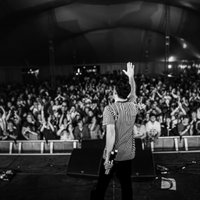
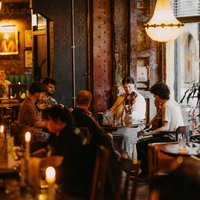
The Merchant City is now one of Glasgow’s primary nightlife and dining areas, centred on Ingram Street, Brunswick Street and Virginia Street. Hutchesons Bar and Brasserie occupies the converted Hutcheson’s Hospital. Bar Gandolfi and Café Gandolfi on Albion Street have been landmarks since the 1980s. Lebowskis, Babbity Bowster, the Corinthian Club (in a banking hall of extraordinary grandeur) – the range runs from cocktail bars in Georgian townhouses to late-night clubs in converted warehouses.
The Italian Centre’s fashion boutiques (Versace, Armani and others in the original opening; various high-end independents since) continue to mark the area as aspirationally upscale, which sits somewhat ironically against the history of the buildings they occupy. Glasgow has never entirely resolved this tension, which is part of what makes the Merchant City interesting to think about rather than just pleasant to visit.
Worth visiting: Trades Hall (still functioning, tours available), Tobacco Merchant’s House (Miller Street), Hutchesons Hall (Ingram Street)
Eating and drinking: Gandolfi Fish, Bar Gandolfi, Babbity Bowster, the Corinthian
Corrections
Spotted something wrong? Send a correction.