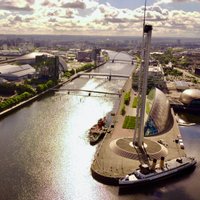
The Glasgow/Edinburgh debate is one of those arguments that everyone in Scotland has an opinion on and almost nobody changes their mind about, which suggests it may not be a factual question. Both sides are entrenched. Both have reasonable points. The truth – inevitably, irritatingly – is that they are doing quite different things and the comparison is only useful if you know what you’re comparing.
Edinburgh’s Case
Edinburgh is one of the most architecturally beautiful cities in Europe. The Old Town’s medieval high street dropping down from the castle rock, the Georgian New Town’s elegant symmetry, Arthur’s Seat looming over everything – these are genuinely extraordinary urban set pieces. The Fringe is the world’s largest arts festival. The whisky tourism is serious. The restaurants have improved markedly over the last decade.
Edinburgh is also expensive, self-conscious in a way that can tip into preciousness, has a city centre that moves at the speed of a city three times smaller, and – this is the real problem – is full of people from Edinburgh, which has historically been a mixed proposition. Its population contains more Scots from elsewhere, English migrants, and international visitors than Glasgow’s, which gives it a more cosmopolitan surface but a less distinct character.
Glasgow’s Case
Glasgow is the real city: larger, cheaper, louder, more economically diverse, with better food (the restaurant scene per capita now rivals Edinburgh at significantly lower average prices), better music (the venues are better, the local output is better documented, the audiences are more demanding), and people who will, genuinely, tell you where to go if you’re lost and then spend fifteen minutes making sure you understand the directions.
Glasgow’s architecture is different from Edinburgh’s: less immediately picturesque, more monumental in the Victorian way – the style is “ambitious city with industrial money” rather than “Georgian capital.” The West End is beautiful on its own terms. The problem Glasgow has had is that its regeneration happened later than Edinburgh’s tourist branding, so the city spent several decades carrying a reputation that its reality had already left behind.
The Verdict (Such As It Is)
For a tourist visit, Edinburgh wins on first impressions – the castle, the Royal Mile, the visual drama are immediate. For a long weekend, Glasgow wins on food, music, and value for money. For actually living, Glasgow wins by a substantial margin that includes cost, community, and the daily texture of urban life.
Glasgow’s own citizens are clear on this. They are also, admittedly, not the most objective panel. But the consistency with which Glaswegians love their city, and the consistency with which visitors discover they love it more than they expected, suggests the argument is less even than Edinburgh’s marketing budget implies.
The fairest summary: Edinburgh is a visitor’s city. Glasgow is a Glaswegian’s city. Both are better experienced from Glasgow.
Corrections
Spotted something wrong? Send a correction.